Friday, May 12, 2006

And now for something Completely Different: Gloomy Bear

Photobucket - Video and Image Hosting


This is the story of a little boy and a cute, cuddly, abandoned, pink bear cub. Captivated by his cuteness, the little boy decided to adopt his new pink pal. He took him home, took care of him, and the two became the best of friends...Until the cute little cub grew up.

The cuteness of stuffed animals, wild and feral in real life, seemed strange to Mori Chack (Chax). "It is only natural for a bear to attack humans. I wanted to express that in a cute manner."

And that's what he's been getting paid to do, since 2002, when he was discovered selling hand-made postcards on the streets of Osaka. Almost overnight, Gloomy Bear, in all his pink, kawaii-style gruesomeness, had clawed his bloody way into the hearts of Japanese youth.

Gloomy, pronounced "gurumi" in Japanese, actually means stuffed, and is the suffix of the word "nuigurumi" (sewed and stuffed) meaning "stuffed animal" in Japanese. Unlike his Disney cousin, Pooh-san, who also enjoys great popularity among kawaii kid consumers, Gloomy can not be tamed by the society he's caged in.

Today, Gloomy Bear can be found sitting pretty, stuffed and fluffed on shelves all over Japan. Bloody key chains, ketai straps, stationary, and almost any other product plastered with this strawberry-sweet killing machine are never hard to find. Come on! You gotta admit -- he is kind of cute -- once you become desensitized to the disturbing, blood-drenched claws and mauling mouth... So let me know if you're in the market! (^-^)/

Monday, May 8, 2006

Kamishichiken Geiko

Photobucket - Video and Image Hosting
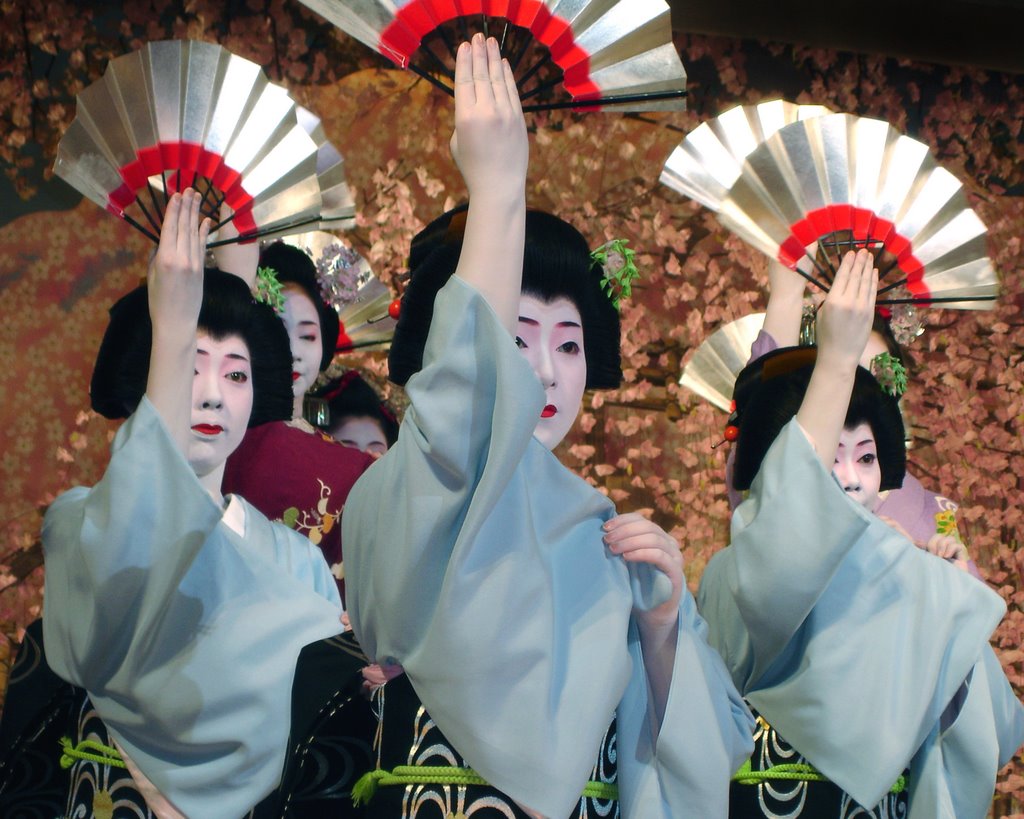
Katsukiyo and Umewaka, 2 geiko of Kamishichiken district, perform during the Kitano Odori.

A short excerpt from the Kitano Odori programme:

Kamishichiken is the oldest and most distinguished gay quarters (as in merry, not the modern connotation) in Kyoto, and training of geiko is given with the idea of producing an excellent few rather than a large number of mediocre entertainers. Therefore they are required to master many arts, such as shamisen, hand drum, dancing and traditional ballads like kiyomoto, tokiwazu, kouta, and nagauta...

Stay tuned for More to come!

Monday, May 1, 2006

Colors of Spring

Photobucket - Video and Image Hosting

枝垂れ桜 【しだれ桜】(shidare・zakura) A beatiful, weeping cherry tree on the banks of the newly flooded rice paddies, soon to be planted with this years crop. Most of the cherry blossoms have long since fallen to earth, petal by petal like snowflakes in the warm spring wind, gathering in pink puddles beneath the trees. I found this tree in full bloom near Nagano, in Magome、 a small yet remarkably well-preserved Edo period post town on the Nakasendo (中仙道・The Road Through the Mountains), which once connected Shogunate power center Edo (now Tokyo) with the Imperial seat of Kyoto. Magome is also the birthplace of one of Japan's most revered and beloved authors, Shimazeki Toson. (Conveniently located about 20 minutes from my humble abode! (^-^)/)

Tuesday, April 25, 2006

Geiko of Miyagawa: Kyo Odori Finale

Maiko-han of Miyagawa: Kyo Odori Finale

宮川町の舞妓はん:京をどりの「宮川の音頭」


Excerpt from the 57th Annual Kyo Odori Program:

The long cold winter gives way at last to the arrival of spring in the ancient capital of Kyoto, and the Kyo Odori is always a welcome and colorful addition to this flower-filled season.

Famous for their beauty, the geisha and maiko of Miyagawa-cho grace the Kyo Odori stage to offer lively, fun, and elegant portrayals of seasonal culture, local flavor, and stories that developed in places throughout Kyoto...

Time always seems short,but we hope that the seven scenes of this year's performance, Seasonal Glories of the Capital, will provide a sense of the tradition and beauty embodied in the local performing arts.

Monday, April 24, 2006

Kimika's Beautiful Kimono

君香の美しい着物

Image hosting by Photobucket

Kimika strikes a pose during a peice entitled "Colorful Scenes of Kyoto," showing off the breath-taking yuzen design on the long, flowing sleeves of her kimono. Kimika is a young maiko, or apprentice geiko, in Miyagawa-cho, one of Kyoto's Gohanamachi (literally 5 Flower Towns), or geiko entertainment districts. (57th Annual Kyo Odori).

Thursday, April 20, 2006

Touge & The Fast and the Furious: Tokyo Drift

Tokyo-Style Touge 峠 Drifting to a Theatre Near You

Watch the the trailer for Tokyo Drift!

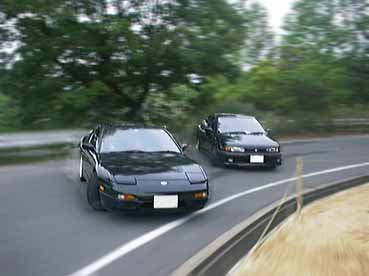
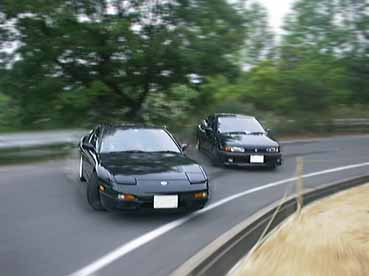
Ever heard of Touge (pronounced toh-gay)? Doubtful, but the chances are you've heard of drifting. If not, you're about to get a crash course a la Hollywood: Fast and furiously. Quickly catching on in the States and abroad, this new racing craze's roots run deep through the twisiting, turning, roads of Japan. Touge itself refers to the mountain passes that wind their way through the mountainous terrain of the Japanese archeapelago.


Drifting is the controlled loss of traction, causing a car to appear as though it is out of control. Nothing, however, could be further from the truth. A good drifter is in control of his car at all times, easily taking on five or six opposing turns without traction, at speeds of over 80mph, cutting angles of 45 degrees or more. As if that isin't potentially dangerous enough, in tougue, this is all done with the loving embrace of a wall of rock to one side and the comfort of a sheer drop off a cliff on the other. In a battle, the lead car wins if the gap between the cars increases -- the following car wins if the gap stays the same from start to finish.

"How?" You ask? In the words of Keiichi Tsuchiya, the one and only Drift King, and inspirational model for the main character in the popular manga series, Initial D (Kashiramoji D):

"You brake and then turn the wheel, step on the clutch, and pull the e-brake. Release the e-brake, go into countersteer mode, then wait. Wait until you know the car is facing the corner exit direction. then you smile and slam on the gas as you exit the corner."

There you go. Easy as that!

Thus the mission to infiltrate the scene begins...